Every thread feeds the next. First-principles calculations generate data, machine-learned models compress it, agents search it, and our experimental collaborators close the loop.
One lab, four length scales
10⁻¹⁰ m · Å
Electrons
DFT for formation energies, migration barriers, and the reference forces that train everything downstream.
10⁻⁹ m · nm
Atoms
MLIP-driven molecular dynamics at near-DFT accuracy, millions of steps, active learning in the loop.
10⁻⁷ m · sub-μm
Microstructure
Interfaces, grain boundaries, and degradation fronts — where real materials actually fail.
10⁻³ m · mm
Devices
Continuum and FEM surrogates for cells, joints, and processes that engineers can build.
representation
Foundation models for materials
Multimodal representations carrying composition, structure and process in one embedding, so a model trained on one property transfers to the next — and generative models can run the design in reverse.
multimodal featurizer
knowledge transfer
GCN
inverse design
Related papers→
agents · automation
Autonomous discovery agents
LLM-based agents and NLP pipelines that mine literature, build databases, plan simulation campaigns, and decide what to compute next — closing the discovery loop without a human at every step.
LLM agents
active learning
text mining
high-throughput
Related papers→
Å · potentials
Machine-learned interatomic potentials
Domain-specialized and data-efficient MLIPs — fine-tuned for specific chemistries, validated on relaxation and interface adhesion, with uncertainty-driven active learning that calls DFT only where the model is wrong.
foundation MLIP
data efficiency
steered MD
interface adhesion
Related papers→
μm–mm · mechanics
Multiscale simulation & surrogates
Bridging atomistic results to engineering scale: cohesive-zone models for multi-material interfaces, thermal surrogates for manufacturing, and safety models for cells under abuse.
DFT → MD → FEM
CZM / interfaces
induction heating
thermal runaway
Related papers→
nm · energy materials
Batteries by computation
High-throughput screening of cathodes and solid electrolytes across Li, Na, Ca and Zn chemistries, plus atomistic models of the cathode/electrolyte interfaces that govern lifetime.
Ni-rich NCM
Na-ion layered
NASICON
garnet / LGPS
high-entropy
Related papers→
thin films · precursors
Semiconductor & process materials
ALD and organometallic precursors, thin-film interfaces such as TaN–Cu, Ru–SiO₂ and W–TiN, 2D heterostructures and MXene / MAX-phase chemistries — the same simulate-and-learn loop applied to device fabrication.
ALD precursors
thin-film adhesion
2D materials
MXene / MAX
Related papers→
structure · metamaterials
Mechanical design of architected matter
From zeolite frameworks to kirigami metamaterials — connecting atomistic stiffness to printed macro-structures, and searching design spaces too large to enumerate.
Associate Professor · School of Mechanical Engineering
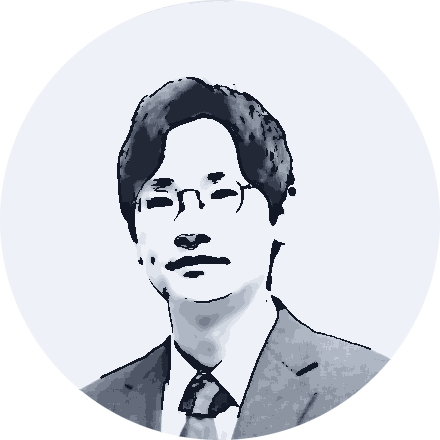
Kyoungmin Min has led the Computational Science and AI Lab since 2019, now at Yonsei University. His research joins first-principles simulation with machine learning to accelerate the discovery of energy and semiconductor materials.
2025 — now
Associate ProfessorSchool of Mechanical Engineering, Yonsei University연세대학교 기계공학부
2019 — 2025
Assistant / Associate ProfessorSchool of Mechanical Engineering, Soongsil University숭실대학교 기계공학부
2014 — 2019
Research Staff MemberSamsung Advanced Institute of Technology, AI/SW Center삼성전자 종합기술원
Earlier
Assistant EngineerSamsung Electronics삼성전자 생산기술연구소
Earlier
Research InternSandia National Laboratories, NM, USA
Ph.D.
Mechanical EngineeringUniversity of Illinois at Urbana-Champaign, IL, USA